Activating Young Leaders To Create a World Where Hate Cannot Flourish

16 Jul

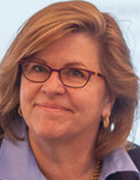
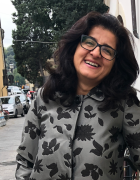
Brianna Pescok and Renee Hobbs visit the State of Deception exhibit at the United State Memorial Holocaust Museum in Washington, D.C.

One of the best things about my new job is the extent to which I’ve been able to think deeply about the needs of college-age students in relationship to the unknowable future we all face. In aiming to create a school of national distinction, I’ve been asked, “Who is the ideal University of Rhode Island Harrington School student?” My answer never wavers. It’s someone with three essential qualities: (1) a “doer” with intellectual curiosity, tenacity, and ambition; (2) someone eager to develop outstanding skills of expression and communication using a variety of forms (written, oral, visual, multimedia, digital, etc); and (3) someone who is relationally-oriented, full of compassion and community-mindedness, and possessing a deep sense of what it means to “do the right thing.”

This summer I was delighted to meet many young people with all these qualities and boy, was it inspiring! For the second year, I participated in a special leadership development program, held in Washington, D.C., called “What You DoMatters,” a three-day program for college students supported by the United States Memorial Holocaust Museum. Students came from more than 40 colleges and universities around the United States and across the world.

The lineup of presenters was impressive. We heard from Carl Wilkins, the last American to remain in Rwanda after the genocide began in 1994. And Eboo Patel offered wise words about the ways that religious understanding can change ourselves — and the world. Former University of Maryland wrestler Hudson Taylor inspired us all with the tale of how he grew into the role of becoming a LGBT rights activist, helping change the culture of college sports.

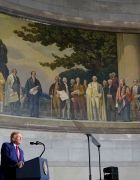
The conference is designed around a special exhibit at the Holocaust Museum, State of Deception, which is an exploration of the rise of German propaganda in the 20th century. To open the event, Sara J. Bloomfield, director of the Museum, welcomed the student leaders, explaining that Nazis didn’t just spread hate. They also promoted an agenda of freedom, unity and prosperity that many people found alluring, using mass communications and the ability to exploit the Germans’ hopes and fears.

JoAnna in action

JoAnna Wasserman created “What You Do Matters” as part of her work for the U.S. Memorial Holocaust Musem.

One of the things I liked best about the conference was the time allotted to dialogue and informal sharing. Conversations were real, personal and authentic.

Some sessions took a close look at contemporary propaganda. Journalist Lou Jacobson took us behind-the-scenes at Politifact.com to see how they help readers distinguish between many shades of lies and truth in the propaganda machine that is Washington, D.C. You’ll also be pleased to know that I offered a session entitled, “Lessons from KONY2012″ where we critically analyzed various perspectives from journalists, activists, critics, and social media experts on the meteoric rise and fall of the activist Jason Russell, whose creative new ways of reaching audiences with powerful messages captured the world’s attention in the spring of 2012. I’ll be sharing the lesson plan that I created for this session as part of a back-to-school suite in September. Stay tuned!

Defining Digital Literacy

14 Jun

What is digital literacy? The term has been rising in visibility since 2009 but it has been used quite differently by a variety of stakeholders including policy makers, educators, and business and technology professionals. Next week, at the American Library Association’s annual conference, I’ll be moderating a discussion about four distinct but interrelated definitions and and uses of this important term. Sharing ideas with me will be Judy Kleinberg of the Knight Foundation, Roseanne Cordell, a librarian at Indiana University South Bend, and Laurel Felt, a doctoral candidate at the University of Southern California’s Annenberg School of Communication and Journalism.

Depending on what group of people you talk to, the term ‘digital literacy’ might suggest one or more of these meanings. Which of these definitions are most (and least) useful to your work? For school, academic or public librarians, which of these terms is most relevant? For those in K-12 education, which do you focus on? And for technology educators, where do you focus? Funders and policymakers, which ones are most likely to resonate with decision makers in local, state and national government?

Computer Skills and Access Issues. Having broadband access and knowing how to use the Internet enable full participation in society. For some, basic keyboard and mouse skills are essential skills while others may benefit from a greater understanding of file management and browsers. For example, websites like DigitalLiteracy.gov emphasize the value of using the Internet to find a job, create a resume and for career exploration.

Issues of Authorship. People are creating and sharing more than ever. The concept of digital literacy reflects the growing importance of user-generated content and the changing role of authorship in a digital age. Digital literacy programs like YouMedia empower people with easy access to powerful tools of expression and communication using social media, images, language, music, sound, and interactivity.

Issues of Representation.  How do you decide what to believe? Librarians who value information literacy note the important skill of being able to evaluate the credibility of information sources. Credibility assessment websites like Politifact and FactCheck.org offer an examination of the relationship between the symbol and the thing symbolized. Determining what’s more accurate or less accurate (or what a “quality” source is) is a judgment about issues of representation.

Online social responsibility. How do people learn to integrate ethics in both their online and offline lives? Many people have real concerns about how people behave in online social relationships. The immediacy and instantaneousness of digital media may promote cyberbullying, sexting, disrespect for copyright, privacy violations and inappropriate information sharing. Groups like Common Sense Media provide guidance for helping young people develop the knowledge they need to make appropriate choices about how to manage their digital life.

If you’re coming to the American Library Association’s Annual Conference in Anaheim, California, please join us to discuss the concept of digital literacy in what is sure to be a dynamic, lively and provocative discussion. If you can’t attend the event, please follow and contribute to the conversation through Twitter with our hashtag, #digilit12.

Saturday, June 23
4:00-5:30
Anaheim Convention Center
Room 206B

A Tribute to Barry Duncan

27 May

Barry Duncan, a pioneer in the field of media literacy

Dear Barry:
Fr. John Pungente tells me that you’re in your final days now. I wanted to take the opportunity to tell you how important you have been to my life and work. You have been a lifelong learner and a courageous teacher and leader. I will always treasure your great mind, warm heart and generous spirit.

I remember when you joined us at the Harvard Institute on Media Education in 1993– you created a rich and informal experiental learning opportunity when you led participants on a walk of Harvard Square, deconstructing the symbolic environment, modeling the way media literacy educators teach attentional skills (learning to see) using a deft blend of theoretical ideas and the sharing of meaning.

And of course, your “call of the loon” at the end of our media literacy conferences has bound us together for many years – and reminded us of our deep connection to the communicative practices of the planet earth. It is an important tradition that I will continue to treasure and carry forward in the years ahead.

Know that I hold you very dear in my heart and acknowledge your important leadership and vision in creating a North American and global media literacy community.

Sincerely,

Renee Hobbs

The Promise of Libraries Tranforming Communities

12 May

Sometimes I wish that information specialists ruled the world. After all, people who know how to find and access information, understand it and analyze it are smart, right? Because they tolerate complexity and acknowledge the limitations of data, they are likely to make good decisions based on evidence and reasoning. I respect and trust information specialists.

But, in fact, today, communication specialists rule the world. In almost every field, the power of storytelling is undeniable in our culture. People who express ideas with the head, the heart and the emotions in good alignment are using the power of communication to make a difference in the world. Through effective rhetorical strategies, they inform, entertain and persuade, mobilizing people to action.  Effective communicators who create and sustain high-functioning collaborative teams are successful in the community and the world of business as well as in non-profit and government sectors. I respect and trust effective communicators.

I’ve been thinking a lot recently about how to bring these two sets of competencies together. As a 2012 Technology Fellow for the ALA’s Office of Information Technology Policy (OITP), I’ve had a chance to work with academic librarians, school librarians and public librarians on an emerging definition of digital literacy. Although digital literacy may take different forms depending on the individual, it’s a constellation of life skills that include basic foundational literacies, like reading comprehension and computer skills, as well as transformational literacies, that include the ability to access and evaluate information, create and critique messages, and use reflective thinking and civic action to make a difference in the world.

To address our most pressing social, environmental, economic and political issues at the local, national and global levels, we need people who can be both information specialists and communication specialists, working with integrity to tell stories, access and share high-quality information by using effective social skills and instructional strategies that enable people to make good decisions as self-governing members of society.

I recently attended an invitational conference hosted by the American Library Association (ALA), the Institute for Museum and Library Services (IMLS) and the National Endowment for the Humanities (NEH). Entitled The Promise of Libraries Transforming Communities, the event brought together librarians, foundation leaders, and government agency heads with the goal of generating new strategies for expanding and deepening the impact of libraries on the communities they serve.

The host of remarkable leaders included Molly Raphael, ALA President, Jim Leach, NEH President, and Susan Hildreth, IMLS head. Also participating in the program were Maureen Sullivan, Deborah Jacobs, Karen Archer Perry, Norman Jacobs, Ron Carlee, Keith Fels, Chris Gates, Rich Harwood and Loretta Parkham, among the many impressive leaders in attendance.

The program was perhaps the most exhilarating event I have ever attended in the library community. We discussed what’s not working, what is working, and what we could be doing more effectively with collaboration. The dialogue was energizing and forward-looking.

There was an important consensus: librarians must be robust and effective community leaders. Of course, in many academic, school and public libraries, librarians already play this role. We all know amazing librarians, like my friend Joyce Valenza or Carrie Russell, who are perfect manifestations of this ideal. But it’s exciting when young people also embrace this identity, as with Anna, one of my own young graduate students, a librarian-in-training, who helped create the “A-Z (Audre Lord to Howard Zinn)” library tent, full of books and resources for protesters and their supporters, which was established at Occupy Boston last year.

Successful librarians are community-connected, comfortable with stepping beyond their expertise, and able to use digital and social media tools for information access, content creation and sharing, and advocacy.

Of course, if we want librarians to support content creation with digital media and learn to lead and collaborate with diverse community stakeholders, we’ll have to build different types of library schools where people can learn these things:

  • Librarians will need training to support the development of people’s creative and digital literacy competencies.
  • Librarians will need to be youth media and public media specialists.
  • They will need public relations and public speaking skills.
  • Librarians will have to get good at using dynamic strategies of community engagement through both traditional face-to-face methods and with online and social media tools.
  • And they’ll need to identify and respond to the information needs of communities in the many ways recommended by the Knight Commission’s report on the Information Needs of Communities in a Democracy.

Given that librarians are embedded in more than 17,000 communities and institutions large and small in every corner of this country, it’s a thrilling time to imagine how to awaken the public spirit and nurture librarians as community leaders and civic activists.

Art, Journalism and Propaganda

24 Mar

Mike Daisy’s emotionally powerful monologue about the conditions of life in China for workers at the giant industrial plant where Apple products are manufactured has generated a lot of controversy for National Public Radio, This American Life and New York’s Public Theater, where he launched his project. But who has considered the role of the reader/viewer/listener in all this?

Mike Daisey emphasized that his show “is a theatrical piece whose goal is to create a human connection between our gorgeous devices and the brutal circumstances from which they emerge.” It uses a combination of fact, memoir, and fiction to tell its story. But when NPR’s Ira Glass discovered the inaccuracies and fabrications in the work, he issued a powerful retraction.

Journalists have been having a field day with Mike Daisey, equating him with Rush Limbaugh and FOX News. Some see him as an inept propagandist, telling fantastic and highly distorted tales that map onto people’s existing worldviews about the human cost of high-tech capitalism.

The New York Times has exercised its thought leadership on this issue with a predictable and solidly heavy hand. David Carr’s piece makes a flat assertion that it’s never OK to lie in pursuit of the truth. Similarly, Charles Isherwood claims that “nonfiction should mean just that: facts and nothing but the facts,” arguing that “theater that aims to shape public opinion by exposing the world’s inequities has no less an obligation than journalism to construct its larger truths only from an accumulation of smaller ones.”

Other journalists offer a more nuanced perspective. In “The Price of Deceit,” Rachel Manteuffel of the Washington Post acknowledges her identity as a journalist-storyteller. She reveals her own strategic use of rhetorical devices in shaping readers’ interpretation of Daisey’s personality and character. For example, when she describes his tendency to spit a little bit during a monologue performance, she uses detail selectively to promote a specific emotional response from the reader. She comforts readers by noting that the information she chooses to emphasize (selective and emotionally loaded as it is) is accurate.

No doubt about it: Artists and journalists are different kinds of truth-tellers and storytellers and always have been.

Here’s my problem with the whole affair: The critique of Mike Daisey offered up by journalists reflects a fundamental belief that meaning, authenticity and truth are solely located in the text. Based on this, it’s easy to play the blame game by setting up rigid hierarchies of truth. But Umberto Eco’s adventures in semiotics have helped us recognize that meaning is in people and contexts, not only in texts. One of the key concepts of media literacy is the idea that people interpret messages differently. It is at the interaction between reader, text and cultural context where meaning is actually created.

All works of human creativity – in both the genres of art and journalism– are ‘open’ and ‘unstable,’ susceptible to a wide range of interpretations. As readers/viewers/listeners, we are the critical agents in the meaning-making process.

David Shields explores these issues in his lyrical and highly engaging book, Reality Hunger. All the distinctions between the original and the plagiarized, the scripted and the unscripted, the fictional and the nonfictional are evaporating. Why? Humans need novelty and complexity to pay attention, and too often, standardized, familiar genres (like traditional journalism) can deaden our senses. The representation of reality needs constant renewal.

Through their work, authors seek to wake up audiences. Shields writes, “The purpose of art is to impart the sensation of things as they are perceived and not as they are known. Art exists that we may recover the sensation of life.” Mark Nash describes artists as “double agents crossing back and forth between art and society.” And in doing this, documentary filmmakers have revealed a fundamental paradox that is true of all symbolic forms: to represent reality, you sometimes have to fake it.

In media literacy, we recognize this by emphasizing the exploration of the complex relationship between authors and audiences, messages and meanings, and representations and realities. The very soul of the rhetorical act is built on the magical relationship between authors (filmmakers, bloggers, visual artists, and journalists) who use symbols in imaginative ways to express meanings about lived experience and audiences (readers, viewers and listeners) who make interpretations.

Anthony Wing Kosner, in his fine Forbes blog post about the “almost true,” points this out: “Perhaps the almost true is potent precisely because the audience has to bridge the gap of truth and in so doing become complicit in its viral spreading. The almost true needs us in a way that the actual truth does not. This is an established principle of theatre, of art, that the audience completes the illusion—makes it more real than real.”

In a profound sense, we make our own reality by the interpretations we make of our immediate experience plus the vast array of media messages that surround us. It’s why I care more about addressing the receivers of propaganda more than berating the propagandists. As Alfredo Cramerotti explains, “To ground the idea of ‘reality’ in its reception rather than its representation is one way to retain the ability to build our own ‘truth claim’ for what is represented, instead of the material making such claims for itself.”

More than anything, I want viewers and listeners of Mike Daisey’s monologue to have the receptive, critical and interpretive skills to recognize the big ideas at the heart of a work and the competence, tenacity and drive to identify and interrogate the aesthetic and rhetorical techniques used to construct it. Ultimately, like Robert Scholes has put it, I want people to be both sympathetic and critical readers. All forms of creative expression in any medium are ultimately rooted in the essai, an attempt at understanding. Writers and readers are equally responsible here. Playing the blame game by setting up hierarchies of truth obscures this fundamental and very human process.

The Paradox of Being Mean

1 Mar

How refreshing to see my alma mater, Harvard Ed School, welcome Lady Gaga to campus to launch the Born this Way Foundation, dedicated to creating a safe community that helps connect young people with the skills and opportunities they need to build a braver, kinder world. It looks like they’re developing a youth media organization, complete with the now de rigeur traveling “Born to be Brave” bus!

Of course, it will take more than a bunch of smart teens with a bus and foundation money to address the challenges faced as young people discover the power, pleasures and paradoxes associated with “being mean.” Adolescents are developmentally focused on taking risks, pursuing experience for the sake of experience, and seeking out novelty, complexity, and intense situations. Engaging in meanness and stupidity – and discovering the complicated consequences – is part of the way we grow up.

The Thrill of Novelty and Unpredictability. There are healthy and unhealthy ways to acquire social power. Unfortunately, among some teens, one quick and easy way to gain social power is to watch or create a drinking video. There are thousands of them online. Several have more than one million page views. These videos feature young people drinking to excess, sometimes with humiliating consequences. A few days ago, Lower Merion High School in suburban Philadelphia sent a letter home to parents informing them about YouTube drinking videos featuring their students.

Controversial online content can be tasteless, gruesome, obscene, emotionally disturbing, full of rage and pain, or just plain bizarre. Videos may feature Holocaust deniers, exhibitionists, and dangerous drivers. You can learn cutting and other forms of self-mutilation by watching online videos. And fight videos are popular online entertainment, which feature children, teenagers, or young adults engaged in real or staged fighting. Almost every high school in America has a fight video online, such as this one from Hope High School in Providence, Rhode Island.  People, young and old, are attracted to novel and unpredictable content like this because of the adrenaline rush of heightened attention that it produces.

Opening Up Conversational Space for Controversy. In order to promote digital and media literacy competencies, educators can open up a respectful and safe conversational space to examine ethical and social issues associated with controversial online content. It’s not easy, however. Lots of teens will shrug off controversial content as no big deal, maintaining a pose of disinterested stoicism to avoid revealing genuine feelings on a complex and controversial topic. Many teens maintain high levels of secrecy involving their online activities and will not admit to exposure to offensive content or participation in problematic behaviors. But I’ve found one way to open up authentic dialogue about controversial online content by discussing a particular type of YouTube video: the online scary maze game pranking videos.

The Pleasure/Power/Paradox of the Prank. Pranking videos can serve as a starting point for launching critical conversations about the complex ethical relationships that exist among users of online social media. Nearly everyone knows somebody who takes delight in playing pranks. The pleasure of the prank can be described by the concept of symbolic inversion, where expressive behavior inverts or contradicts commonly held cultural codes, values, and norms. By inverting power relationships, pranksters gain a form of social power.

I have never met a 12- to 19-year-old who isn’t familiar with this online prank. The video phenomenon began around 2002 when interactive flash videos known as scare pranks or scary mazes began to emerge across the Internet. Upon clicking the link, the viewer is presented with a puzzle game that requires a high level of concentration, only to be disrupted by an ear-piercing scream and ghastly photos from horror films. Scary maze websites were originally shared via e-mail, chat rooms, or instant messages before the advent of YouTube.

A YouTube search on the keywords “scary maze game” displayed more than 48,000 videos (up from 11,000 in 2011!) which generally feature a person who is scared by playing the game. Videos have been created by YouTube users from Spain, France, Germany, Turkey, China, and other countries. The top-ranked video, “Scary Maze Prank–The Original,” has been viewed more than 25 million times! The video features a very young boy playing the maze game on his home computer. When startled by the sound of screaming and a gruesome face dripping with blood, he screams, hits the computer monitor instinctively, and then runs away from the computer, crying uncontrollably in a deeply visceral fear response.

Educators and parents can choose to ignore or engage with young people on this important issue. Learn more about the instructional methods I’ve developed to open up conversational space about controversial videos in Chapter 7 of my new book, Digital and Media Literacy: Connecting Culture and Classroom.

In-Between Two Worlds: From Print to Digital

24 Jan

This is a version of the presentation I made at the January 22, 2012  “One Book, One State” event which was sponsored by the Rhode Island’s Center for the Book. More than 200 people gathered in a historic church just outside of Providence to hear Geraldine Brooks, the Pulitzer Prize winning author of Caleb’s Crossing, a work of historical fiction that brings readers into the life of the first Native American to graduate from Harvard University — in the year 1665.

I’ve been reading a lot more on my iPad these days. Reading online has some tiny frustrations: I miss the cover art and pagination of a printed book. But there are some deep pleasures. For example, I love the ability to highlight a digital text and then share my highlights with other readers. I love the “swish” movement of turning digital pages, I admit. Highlighting a moving, lyrical passage (and discovering that hundreds of others have identified it too) makes me feel connected to a community of readers.

From a scholarly point of view, however, we don’t know much about online reading. We know it can be different in many ways from reading from a printed page. This topic inspires my great curiosity, which is one of the many reasons why I’ve picked up my life and my family to come to the University of Rhode Island to serve as the Founding Director of the Harrington School of Communication and Media. I am relishing the opportunity to work with distinguished scholars and practitioners to create a new kind of communication school, developing innovative interdisciplinary programs that enable us to figure out how to help people acquire the new competencies required for full participation in contemporary life.

As I read Caleb’s Crossing on my iPad, I couldn’t help but have a highly personal response to this remarkable coming-of-age novel which offers readers a close-up exploration of the state of in-betweeness. It’s a major theme of the novel. We feel this state of mind as we see the young Native American boy, Caleb, encounter the strange world of the English settlers, and through the novel’s narrator, Bethia, the minister’s daughter, who gains insight on the intense beauty of the natural and spiritual world through her interactions with the Wampanoag natives of Martha’s Vineyard in the 1600s.

The state of in-betweeness is personally relevant to me. I’ve been living with it for many months, as I have anticipated the move from my beloved urban lifestyle in Philadelphia to a new life in Rhode Island, where the waves and the natural world are close at hand.  Reading the book helped me see with precision the exquisiteness of the state of being in-between. As Geraldine Brooks has captured it, it represents a place of possibility for both Caleb and Bethia as their encounters with the “other” create opportunities for deepening their personal and social identity.

Having a personal response to literature like this is certainly among the most profound joys of my life. It happens when people can not only decode and comprehend the little black squiggles, but when they feel deeply engaged in the reading process. Having a personal response to literature demands a confident stance toward reading. I’m lucky to be an empowered reader.

But I’m aware of the fact that many people never get to experience this pleasure. There are far too many reluctant readers in our society today. Too many people grow up today seeing reading as merely a chore, another set of hoops they must jump through on the way to graduation. Lots of people – and perhaps some here today – feel the urge to blame the iPad, the videogame, and the TV for this situation. But there’s no point to that.

Today, it’s more important than ever to stop the either-or thinking that pits print media in opposition to  digital media. In fact, the world of mass media, popular culture and digital media can help engage readers and promote intellectual curiosity. One example of this is work of filmmaker Anne Makepeace, whose film, We Still Live Here, offers insight on the experience of contemporary Wampanoag people who reconnect to their cultural heritage by reviving their native language. Digital media is not the enemy of print reading. Educators, librarians and authors — and ultimately all citizens– must recognize and exploit the many synergies that exist among the various types of new literacies that are emerging today.

In many respects, we are –all of us– living at a time of historic in-betweeness, as the world has shifted from a print-centered cultural environment to an increasing digital world. We may mourn the impending loss of wandering the stacks, cracking open the cover of a new book, feeling the weight of it in the hand. Yet we find ourselves surprised and pleased by the thrill of using new tools and technologies for the transformative practices of reading and writing. Living with iPads, e-books and digital media, I’m intensely aware of how many people are out there for me to discover and learn from. Like Caleb and Bethia, I relish the sense of possibility of self-discovery that results from being in-between the print and digital worlds.

Trust, Mistrust and Advertising

19 Dec

I’ve been exploring the practice of media literacy education in early childhood settings. One important concept that I like to introduce to preschoolers is the idea that media messages are constructions– they’re made by people who make choices.

Of course, all acts of communication involve a set of choices. The decision to lie or tell the truth is a choice that’s highly relevant to young children, and researchers are helping us see the developmental trajectory of this particular competence as a social skill.

Maggie Severns of the New America Foundation writes:

Children naturally seek out information, but young children lack the ability to decide who and what are trustworthy sources. Learning when to trust and distrust other people is an essential early skill, as that information enables children to begin the lifelong process of filtering and applying things they learn to their understanding of the world.

She describes research from the September/October issue of Child Development where psychologists at the University of California, San Diego, found that children begin to learn about distrust around age three, but cannot apply that sense of distrust until around age five.

Media literacy educators frequently explore the genre of advertising with young children because it’s ubiquitous in their lives and provides an opportunity for them to recognize characteristics of persuasive messages. In fact, some children under age seven can make inferences about the author’s motive and purpose, when the genre is familiar to them.

Parents and teachers may approach this issue differently, depending on their existing attitudes about advertising. Some parents and educators may conceptualize advertisers as the “tricksters” while others will not see it very useful to frame advertising as essentially a form of lying. Both groups generally agree, however, that children need to recognize that information and emotional responses are shaped by the choices made by advertisers aiming to persuade.

But as the developmentalists note, it’s one thing to be able to recognize and identify an trustworthy and an untrustworthy source. It’s another thing entirely to be able to disregard untrustworthy sources. That’s not easy.

In fact, we could argue that this phenomenon persists into well into adulthood, as voters may recognize the false and misleading political campaign advertising (given that it’s normative to the political process), but still be influenced by it in making their choice at the ballot box.

For most people, it’s actually pretty difficult to disregard untrustworthy information. One of the reasons why media literacy has such useful potential as a community education movement is that awareness of the process of identifying trustworthy and untrustworthy sources and using information appropriately based on source credibility are competencies that apply across a wide range of stakeholders and contexts across the lifespan.

End of Semester Blue-Joy

18 Dec

Yes, grading papers is a slog, but it’s a precious moment when you stumble across an undergrad expressing the reverberations of the wide-open mind, as “ridiculous amounts of ideas are bouncing around” inside the brain at the end of the semester. And in capturing the joy of teaching by describing “the pure beauty of the process of student-based inquiry learning,” this young writer explains how experiential learning is transformative:

I find myself constantly questioning, learning about what can be done in the ways of approaching difficult situations, in areas including education, culture, class and race, amongst many others. I would not trade my experiences at this program for anything, as I feel it has opened my eyes, which is not to say they haven’t been open the whole time, but it is almost like getting a new prescription. My vision is still not completely clear, but through the experiences and knowledge gained, I have created a hunger inside myself, which yearns to be more introspective – to look at everything from every angle I can possibly think of.

Sentimental me: No joy compares to the joy of teaching and learning. No more glorious present could be received than this. Seriously. Exhausted me: Give him an A.

MacArthur Foundation v New York Times

26 Nov

I’ve been surreptitiously enjoying the ongoing “spat” of sorts between the MacArthur Foundation and Matt Richtel and other New York Times writers and contributors. It’s been a feisty and useful debate that demonstrates the still-robust nature of the very productive tension between empowerment and protectionist impulses on the American media education scene.

Why is it this fall season I see so many real benefits associated with picking a fight? (Hmm..perhaps this is a topic for me and my therapist!) In my view, the empowerment-protectionist tension captures exactly the genuine paradoxes at work in the lives of many teachers and parents today. Who doesn’t have a significant “love-hate” relationship with digital media, mass media and popular culture?

After nearly $80 million of MacArthur hoopla has been spent on demonstrating the wonders of digital media and learning, the NYT writer Matt Richtel has been exploring some of the omissions, paradoxes and contradictions in the enterprise,  nearly always featuring some of the MacArthur scholars in response to various and sundry critiques. For example, I especially enjoyed the October 23rd story on the children of Google executives who attend a Waldorf school where technology is not used.  When Richtel then wrote about the amplification of teenage identities and the resulting potential negative impact on human attention, intellectual curiosity and emotional responsiveness, the folks at MacArthur’s Spotlight on Digital Media and Learning hammered out a critique.

Dismissing or Trivializing Educator Concerns

There are some annoying characteristics about how this generally healthy debate gets played out in the blogosphere, however. I’m especially frustrated by a certain dismissive attitude about educators’ questions about or resistance towards the use of digital technology in education. Teachers who resist e-books are sometimes treated like pariahs, for example. Several times, there’s the insinuation that older teachers simply have to die out, like the dinosaurs. Perhaps I’m just too sensitive, but it doesn’t feel quite right to make teachers feel guilty or ashamed of their anxieties or their lack of interest in using technology. In my view, teachers’ attitudes about media and technology are a highly significant place of inquiry – a place of conversation and dialogue, not a “problem” to be “solved.”

The healthy tension between the NYT and the MacArthur Foundation mirrors an instructional practice that I have used with both educators and college students for several years (something I have written about in my new book, Digital and Media Literacy: Connecting Culture and Classroom). Called “Our Love/Hate Relationship with the Media: A Four Corners Activity,” the lesson never fails to generate meaningful dialogue about the many paradoxes associated with our complex and multifaceted engagement with print, visual, sound and digital media. Through a structured dialogue activity, participants inevitably reveal their capacity to articulate both their many “loves” concerning media and technology along with sensitive and often poignant reflection about those aspects of life with media and technology that they “hate.” The lesson works because it enables participants to deepen their awareness of just how many different aspects of contemporary life and cultural values are inflected by media and technology. Such dialogue naturally builds an appreciation for the many valuable perspectives across the whole continuum of attitudes and beliefs and it results in a clearer understanding of the practical need for digital and media literacy education in both higher education and in K-12 schools.

A Timeless Concern: The Impact of Media on Human Development

In critiquing the idea of neuroplasticity and the potential impact of digital media on attention, the MacArthur post actually quoted a silly Tweet from Siva Vaidhyanathan, stating “there are no wires in the human brain.” And so when Chrisopher Chabris demolished MacArthur’s own Cathy Davidson in reviewing her new book about the brain, attention, learning and technology, one line was particularly resonant:

Like many authors who embrace new ideas rather than build on what has come before, Davidson sets out to destroy the old beliefs, as if burning down a forest in order to plant new crops.

Perhaps that’s what’s most frustrating to me about the overall tone of the MacArthur digital media and learning project. Framed as “something completely different,” digital learning may lose touch with its deep roots in inquiry learning, creating ed tech champions but alienating the larger mass of classroom teachers who don’t get all doe-eyed and gushy over apps, cell phones and gaming in schools. That’s why it was so refreshing to see a nicely balanced, sensitive and nuanced piece from the New America Foundation’s Lisa Guernsey about the best approach to address digital and media literacy in the elementary grades. In my experience, I’ve found that elementary educators perceive many subtle ways in which media and technology displace other forms of expression and communication in problematic and limiting ways. Their concerns about media, popular culture and technology are worth respecting. But because they also fully embrace the opportunity to educate the whole human being, elementary educators can often make use of popular culture, media and technology in creative ways that support the development of students’ imagination, creativity, collaboration and communication skills.

Follow

Get every new post delivered to your Inbox.

Join 2,105 other followers